
CHOIS — Choose Joy. Open Possibilities.
A free playground for your brain, imagination and soul.
What if learning could feel like playing? What if a different question, a silly game, a new movement or an unexpected idea could open a door you had not noticed before?
CHOIS is an invitation to experiment. Try a little improvisation. Look at something familiar in a new way. Make up a story. Move, notice, laugh, listen and connect. You do not need to be an actor, an artist or an expert. You only need a little curiosity.
Explore the sections below. Open the little arrows to find simple games, short exercises, films and ideas you can try on your own or with other people. Most activities need no equipment and take between two and ten minutes.
WHY PLAY?
Because play gets you out of autopilot. It invites your attention to wake up, your imagination to make new combinations, and your mind to practise adapting as things unfold. You learn by trying, noticing and having another go — not by getting it perfect.
A tiny CHOIS reminder: Reading about play isn’t playing. You can read the recipe all day — at some point, you have to taste the cake. So go on. Play a little. 😉
SHARE THE GOOD STUFF!
A film that stayed with you? A game that got everyone laughing? A little exercise, a clever tip or a spark of inspiration?
CHOIS grows through sharing. Send us your discoveries — they might inspire someone else’s next playful moment.
Share your ideas with us → (Use the contact page and mention CHOIS.)
Choose your CHOIS
01 · PLAY — Improvise and say “yes, and…”
Benefit: Practise spontaneity, creative thinking and building on other people’s ideas.
The idea: Improvisation is not about being funny or clever. It is about paying attention, accepting what is happening and adding something of your own. “Yes, and…” is a way of building on an idea rather than shutting it down.
Brain bit: You’re listening, predicting and updating your next move in real time. That gives attention, flexible thinking and impulse-control skills a little workout — no punchline required.
Try it: Yes, And
With a partner · 3–5 minutes. One person begins with an imaginary offer: “We have just discovered a tiny door in this tree.” The other responds by accepting the idea and adding something: “Yes, and there is a little light shining through it.” Keep alternating, adding one detail at a time. Let the story become surprising.
On your own: Write down a playful opening sentence. Add ten “and…” sentences without editing or judging them.
Notice: What happens when you stop searching for the perfect idea and start building with what is already there?
Try it: One-word story
With two or more people · 5 minutes. Tell a story together, one word at a time. Keep the rhythm moving. Listen carefully, because every word changes what can happen next. The story can be wonderfully ridiculous.
Try it: The object has a secret life. Pick an ordinary object. Invent three unexpected uses for it, then let the object introduce itself as a character. What does it want? What is it afraid of? What adventure is it waiting for?
Remember: “Yes, and…” is a creative game, not an instruction to agree to anything that feels uncomfortable or unsafe. You can always pause, pass or change the game.
02 · SHIFT — Step out of autopilot
Benefit: Refresh your attention and interrupt familiar routines by noticing something from a new angle.
Our routines are useful: they save time and effort. But occasionally doing something in a different way can invite fresh attention and curiosity. These are small experiments, not tests of intelligence or memory.
Brain bit: Novelty makes the brain pay attention. A small change asks it to notice details it would normally filter out — hello, fresh perspective.
Try it: See the familiar, again
2 minutes. Choose an everyday object near you: a cup, a key, a leaf or a shoe. Look at it as if you have never seen it before. Notice five details: a line, a shadow, a texture, a tiny mark, a reflection. Give it a new name.
Try it: A different route. On a familiar, safe walk, take a different path or pause at a place you usually pass. Notice three things you had not seen before. Stay aware of traffic, access and your surroundings.
Try it: Change the perspective. Look at a room from a different seat or standing position. What becomes visible? What disappears? What new story could you tell about this place?
Notice: Did changing one small thing change what you paid attention to?
03 · CREATE — Make something without needing to be good
Benefit: Give your imagination room to make connections without the pressure of getting things right.
Creativity is not reserved for artists. It can begin with a small invitation to combine, invent, doodle or play without worrying about the result.
Brain bit: Making something means retrieving ideas, mixing them and testing new combinations. Letting go of the “perfect” result can free up room to explore more possibilities.
Try it: Three words, one story
3 minutes. Choose three unrelated words — for example, “umbrella”, “moon” and “pancake”. Make up a tiny story that includes all three. Say it aloud, write it down or draw it as three little scenes.
Try it: The one-minute doodle
1 minute. Put pen to paper and draw continuously for sixty seconds. Do not erase or correct. Turn the result into a creature, a landscape or a map of an imaginary place. Give it a title.
Try it: A character from a feeling
Choose a feeling — excitement, uncertainty, calm, impatience or delight. Imagine it as a character. How does it walk? What does its voice sound like? What would it say if it could speak for one minute? You can write, draw or act it out.
Notice: What did you make when you gave yourself permission not to get it right?
04 · CONNECT — Listen, respond and create together
Benefit: Practise attentive listening, empathy and shared creativity with another person.
Play can help people pay attention to one another. These gentle activities invite listening and shared imagination. Choose a partner who is happy to take part.
Brain bit: Conversation is a two-way dance: your brain tracks words, tone, timing and facial cues, then adjusts your response. Listening is active brainwork, not waiting for your turn.
Try it: The listening mirror
With a partner · 4 minutes. Person A speaks for one minute about something they enjoy noticing — a place, a hobby, a memory or an idea. Person B listens without interrupting. Then B reflects back one thing they heard and asks, “What else?” Swap roles.
Try it: Copy and transform. One person makes a slow, simple movement. The other mirrors it. Then the second person changes one small detail and the first follows. Keep exchanging the lead. This can be done seated and with small movements.
Try it: Build a world. One person names a place — “a library under the sea”. Each person adds one detail in turn. Together, invent the sounds, inhabitants, rules and surprises of that world.
Notice: What helped you feel heard? What happened when you followed another person’s idea?
05 · WATCH — Films and moving ideas
Benefit: Find fresh perspectives and turn stories on screen into prompts for reflection and conversation.
Stories can stretch our imagination, help us see through another person’s eyes and invite questions about how we live, learn and create together. Here is a small starter collection: a mix of short videos you can watch now and feature films worth seeking out. Some of the film suggestions are inspired by the Possibility Management film collection, curated within the world of Clinton Callahan’s work. These are invitations to reflect, not films with a single “correct” interpretation.
Brain bit: A story makes you simulate a world: follow motives, predict what comes next and imagine another point of view. That’s why a good film can keep your mind working long after the credits.
Watch now — short videos
- Bagdad Cafe — original trailer (Rotten Tomatoes Classic Trailers). A glimpse of an unlikely encounter, hospitality and the magic that can emerge when people see one another differently.
- Dead Poets Society — trailer. A starting point for conversations about curiosity, self-expression, education and the courage to think independently.
- Possibility Management TV on YouTube. Worktalks, interviews, workshops and short experiments from Clinton Callahan and the wider Possibility Management community.
- PM-Terms Explained: 4 Feelings with Clinton Callahan and Anja Rohlf. A short introduction to a feelings framework used in Possibility Management.
- Radical Relating & Gameworld Building with Clinton Callahan and Anne-Chloé Destremau. A conversation about relating and creating possibilities together.
Feature films to explore
These are recommended films to look for through your local library, cinema or legitimate streaming service. The links below take you to the Possibility Management film notes, where available, rather than to unofficial full-film uploads.
- As It Is in Heaven — Watch for the joy of finding your voice — and what can happen when a community truly listens.
- Accepted — For a cheeky reminder that when one door closes, you can build your own university.
- 12 Angry Men — A masterclass in listening, challenging assumptions and changing a room without shouting.
- Dead Poets Society — A little permission slip to think for yourself, speak up and keep wonder alive.
- Avatar — To zoom out, question your point of view and feel the power of connection.
- Back to the Future — Pure playful energy: curiosity, bold experiments and one very unexpected timeline.
- Thelma & Louise — For a thought-provoking ride into friendship, freedom and refusing to stay small.
Explore the full Possibility Films recommendations for more titles and the Possibility Management perspective on each one. Film availability and language options vary by country and change over time.
After watching, ask yourself
- What moment surprised me or shifted my perspective?
- Whose point of view did I understand differently?
- What happened when someone questioned an assumption or tried another way?
- What would I like to experiment with in my own life?
06 · DISCOVER — The brain, learning and play
Benefit: Understand how experience and practice relate to learning, while keeping the science in perspective.
There is a fascinating relationship between experience, learning and the brain. The brain remains capable of change throughout life. Learning and repeated practice can alter how we use and refine particular skills. This capacity is often called neuroplasticity.
Brain bit: When you practise, networks of brain cells communicate in patterns. With experience and repetition, those patterns can become more efficient or change. Plasticity is real — but it is not magic, and one game does not rewire your whole brain.
Improvisation asks us to listen, notice, respond, imagine and adapt in real time. Research into improv training is promising: some studies have found benefits related to divergent thinking, comfort with uncertainty and aspects of well-being. The evidence is still developing, and results depend on the people, activities and measures being studied.
What we can say responsibly: playful activities offer opportunities to practise skills such as creative idea generation, attention, communication and flexible responding. We cannot promise that one short game creates new neural connections, improves memory, prevents dementia or treats a health condition.
CHOIS is an educational and creative resource, not a medical programme or a substitute for professional care. We aim to distinguish research findings from ideas, personal experience and questions worth exploring.
Curious about the connection between brain and improvisation? Explore Susa Cofiño’s work on neuroscience and improv — a fascinating perspective from the world of theatrical improvisation.
A question to carry with you: What might become possible if I approached this moment with a little more curiosity?
07 · MOVE — Let the world surprise you
Benefit: Use gentle movement and sensory attention to reconnect with your surroundings and invite curiosity.
Movement can be a simple way to change the scene, refresh attention and reconnect with the world around you. You do not need to walk fast or far. Choose a pace and route that feel comfortable for you.
Brain bit: Moving through the world blends balance, body signals, vision and spatial awareness. Add noticing sounds, colours and textures, and you’re giving attention several interesting things to coordinate.
Try it: A five-senses walk
Walk or sit somewhere safe. Notice five things you can see, four sounds, three physical sensations, two scents and one thing you appreciate about the moment. Adapt the exercise to your senses and abilities; there is no need to force any sensation.
Try it: Walk with a question
Take a short walk with a gentle question in mind: “What am I curious about today?” Do not force an answer. Notice what catches your attention along the way. If walking is not accessible or comfortable, try this while sitting by a window or looking at a picture of nature.
08 · SHARE — Bring a little play into everyday life
Benefit: Bring people together, strengthen group connection and make playful learning part of everyday life.
CHOIS activities can be adapted for friends, families, community groups, creative teams and workplaces. Keep the invitation light, explain that participation is optional and make room for different energy levels, languages and abilities.
Brain bit: Shared play asks us to read cues, take turns and adjust to other people. Those small moments of coordination help build the ingredients of trust and belonging — connection is something we practise.
For a group: begin with a short name-and-movement circle, then try a one-word story. Finish by asking each person what they noticed — not who was best.
For a team: try “Yes, and…” in pairs to build on a work-related idea. Then repeat the conversation using “What if…?” to invite alternatives. Keep the activity separate from performance evaluation.
For families and friends: invent a story together, make a silly advert for an ordinary object or take turns adding a new rule to an imaginary game.
If you would like to explore facilitated sessions, talks or group experiences, find out more about workshops and facilitation →
A little more about CHOIS
CHOIS grows from a simple belief: we do not have to wait for a special occasion to be curious, creative or playful. Small experiences can invite us to notice, practise, connect and see familiar things from another angle.
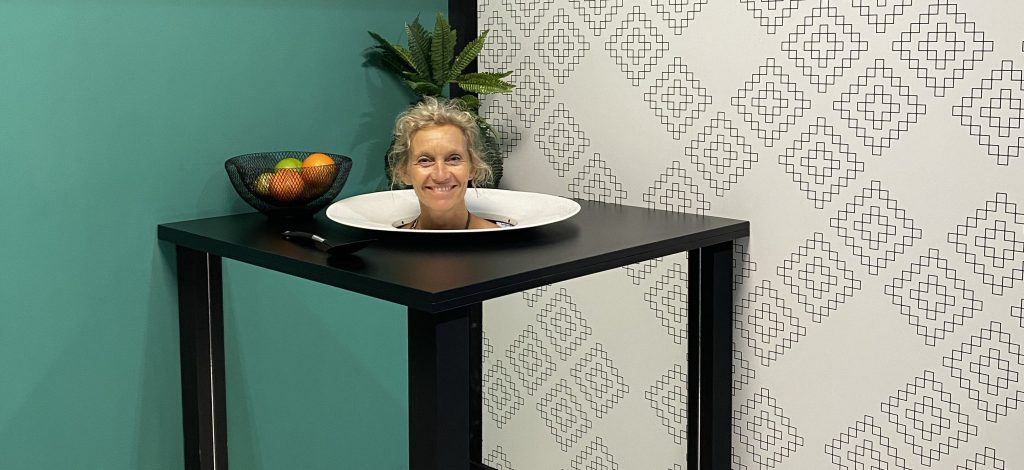
CHOIS is being created by Manuela Stoerzer, drawing on her work with walking, experiential learning, improvisation, creativity and group facilitation. It is a growing collection: practical, welcoming, evidence-aware and free to explore.
Our invitation: Try something. Notice what happens. Keep what is useful. Share the joy.
No performance. No pressure. No perfect answers. Just possibilities.

